Cyanobacteria is extremely toxic for dogs
Cyanobakterien 

The blue-green algae are not actually algae at all, but belong to the domain of bacteria, or more precisely, they are cyanobacteria. For a long time, however, they were classified as algae.
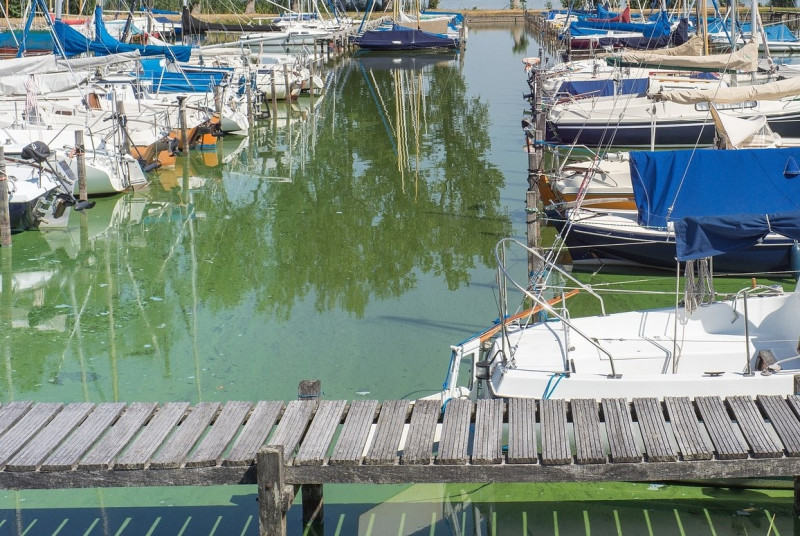
They occur in fresh and salt water and can multiply rapidly at high temperatures. They bloom in carpet-like, green-blue coloured films on the water surface of lakes, rivers and seas. This is usually accompanied by a slightly muddy smell.
Although many blue-green algae do not produce any toxins, we cannot visually distinguish them from toxic blue-green algae. In addition, the various blue-green algae can produce different toxins, which can also have different effects on health. The toxins of the blue-green algae can cause both strong skin reactions through skin contact and dangerous symptoms of poisoning if the dog drinks the water.
Especially in summer, our dogs like to cool off in the cool water. But the warmer it gets, the higher the danger of blue-green algae in lakes, rivers or even the sea. Since our dogs not only swim in the water, but often also drink it or ingest it with their mouths open while swimming, you should always check the quality of the water before letting your dog jump in.
Cyanobacteria is also known as:
- Cyanophyta
- blue-green algae
What should I do if my dog ate Cyanobacteria?
How toxic is Cyanobacteria?
| Toxicity: | (extremely toxic) |
| Toxic parts: | The cyanobacteria found in water are toxic and can be absorbed by the dog through drinking or through the skin. |
| Toxic time: | summer, autumn |
| Antidote: | Unknown |
If your dog shows symptoms of poisoning, it is always an emergency! Time is critical for your dog's life. You should immediately call your vet or the animal emergency services and make sure that a vet is on site and then go there immediately. For the treatment, it helps the vet a lot to know what your dog has ingested.
Occurrence Cyanobacteria
| Plant species: | alga |
| Occurrence: | - |
| Areas: | Europe |
| Flowering time: | summer, autumn |
| Fruit ripening: | - |
Symptoms
The different blue-green algae can also cause very different symptoms due to the different toxins they contain. While some can cause skin irritation, others can lead to liver failure and death by respiratory paralysis if the poisoning is not treated immediately.
The following symptoms can occur in the case of poisoning with cyanobacteria:
- diarrhoea
- faintness
- pale mucous membranes
- shock
Possible symptoms of poisoning with anatoxins (cyanobacteria):
This type of poisoning is very dangerous and in dogs can lead to death within a very short time.
- muscle twitching and muscle cramps
- strong salivation and lacrimation (only with one variant of blue-green algae)
- paralysis
- increased urination
- diarrhoea
- shortness of breath
- death due to respiratory paralysis
Severe skin irritation possible with certain blue-green algae:
- erythema with severe itching
- blisters on the skin
- skin inflammation
Treatment
In the case of poisoning with blue-green algae, the dog must always be taken to the vet as quickly as possible, as - depending on the type of poison - it can die within a very short time.
The vet will always try to remove the toxin from the body as quickly as possible and reduce the specific symptoms of poisoning.
There are different methods to remove the toxin of cyanobacteria (blue-green algae) from the body:
- ACTIVATED CARBON: The administration of activated carbon binds the poison in the stomach. This should be done within 2 hours after ingestion of the poison, if possible, so that the poison does not enter the bloodstream.
- LAXATIVES: The administration of activated charcoal can be combined with a laxative by the veterinarian.
- MEDICATION: The vet can also induce vomiting with the help of various medications to get the toxin out of the body.
- Gastric lavage can be used for detoxification by the veterinarian.
- Skin reactions can be treated with suitable medication and, if necessary, with antibiotics. Algae residues must be removed from the coat as soon as possible.
Furthermore, the veterinarian can provide support through the supply of oxygen, infusions and blood transfusions and treat any seizures that may occur.
You can find more information on poisoning and emergencies in dogs here:
- Avoid, recognise and treat poisoning in dogs
- First aid for dogs
- Know your dog's vitals in case of emergency
Further poisonous plants from A to Z






DigiDogs in other languages and countries DeutschlandGreat BritainUnited StatesPolska
Copyright © 2023 DigiDogs, unless otherwise noted. All rights reserved.
Über uns -
Imprint -
Privacy Policy