Dumb cane is highly toxic for dogs
Dieffenbachia sp. 

The dumb cane is an evergreen foliage plant that is originally native to South America. It is a popular houseplant because of its large, yellow-white patterned leaves.
All parts of the dumb cane are poisonous to dogs, but especially the stem, the leaves and the run-off from the watering cane are highly poisonous. The dieffenbachia contains oxalates and oxalic acids that can severely attack the dog's kidneys. It also contains hydrogen cyanide among other poisons.
Dumb cane is also known as:
- leopard lily
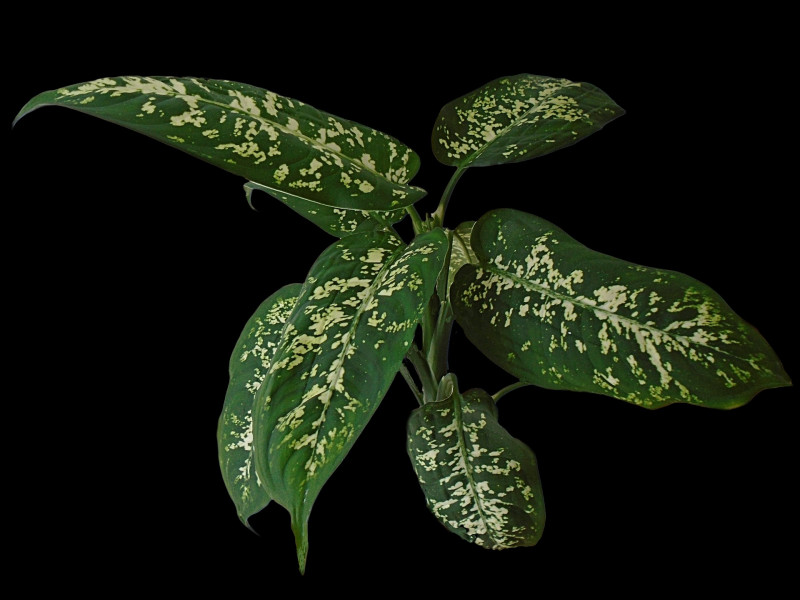
What should I do if my dog ate Dumb cane?
How toxic is Dumb cane?
| Toxicity: | (highly toxic) |
| Toxic parts: | All parts of the dumb cane are toxic, but especially the trunk, the leaves and run-off water are highly poisonous. |
| Toxic time: | winter, spring, summer, autumn |
| Antidote: | Unknown |
If your dog shows symptoms of poisoning, it is always an emergency! Time is critical for your dog's life. You should immediately call your vet or the animal emergency services and make sure that a vet is on site and then go there immediately. For the treatment, it helps the vet a lot to know what your dog has ingested.
Occurrence Dumb cane
| Plant species: | Indoor plant |
| Occurrence: | Indoor |
| Areas: | Europe |
| Flowering time: | - |
| Fruit ripening: | - |
Symptoms
The following symptoms may occur in case of poisoning with the dumb cane:
- increased salivation, as well as irritation and swelling of the mucous membrane of the oral cavity after contact
- later on, shortness of breath
- nausea, vomiting, abdominal pain and diarrhoea
- difficulties in swallowing and loss of voice may also occur
In case of very severe poisoning, the following symptoms may also occur:
- heart and kidney problems (increased urination up to failure to pass urine)
- death may occur due to respiratory failure
Treatment
Unfortunately, there is no antidote for dumb cane poisoning in dogs.
In the case of acute poisoning, the vet can try to reduce the specific symptoms of poisoning by cooling affected areas. The administration of painkillers and calcium can also be helpful. If the poisoning is severe, the vet will also monitor the dog's heart and kidney function.
Further poisonous plants from A to Z



DigiDogs in other languages and countries DeutschlandGreat BritainUnited StatesPolska
Copyright © 2023 DigiDogs, unless otherwise noted. All rights reserved.
Über uns -
Imprint -
Privacy Policy