Wild garlic is toxic for dogs
Allium ursinum 

Like onion, chives and garlic, wild garlic belongs to the Amaryllidaceae family. Wild garlic is a wild variety of garlic that also grows in deciduous forests. The leaves and flowers have a typical garlic smell when lightly rubbed.
Because of its large green leaves of a maximum height of 40 cm, and the white flowers, it is easily confused with the very poisonous lily of the valley. Confusion is also possible with the poisonous autumn crocus.
All parts of the wild garlic are poisonous to dogs, but especially the leaves. Wild garlic is slightly less toxic when dried and cooked. Wild garlic contains disulphides and sulphur compounds that are toxic to dogs and can dissolve red blood cells.
However, a dog would have to ingest a relatively large amount of wild garlic to become fatally poisoned. Poisoning can occur at about 5 grams of wild garlic per kilogram of the dog's body weight.
In small doses, wild garlic is even a very healthy medicinal plant for dogs, especially in spring. You can read more about it here: Wild garlic as a medicinal plant for dogs.
Wild garlic is also known as:
- ramsons
- cowleekes
- cows's leek
- cowleek
- buckrams
- broad-leaved garlic
- wood garlic
- bear leek
- Eurasian wild garlic
- bear's garlic
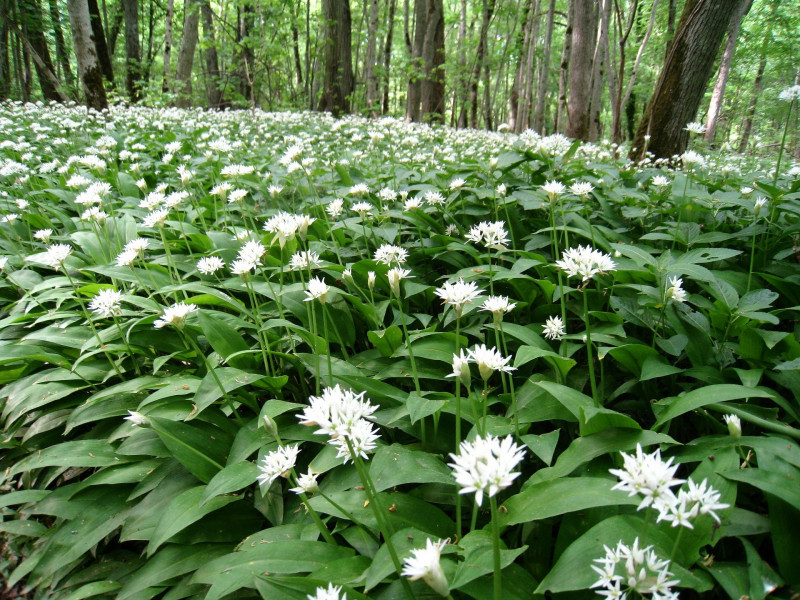
What should I do if my dog ate Wild garlic?
How toxic is Wild garlic?
| Toxicity: | (toxic) |
| Toxic parts: | All parts of the wild garlic are poisonous to dogs, but especially the leaves. Dried and cooked they are slightly less toxic. |
| Toxic time: | winter, spring, summer, autumn |
| Antidote: | Unknown |
If your dog shows symptoms of poisoning, it is always an emergency! Time is critical for your dog's life. You should immediately call your vet or the animal emergency services and make sure that a vet is on site and then go there immediately. For the treatment, it helps the vet a lot to know what your dog has ingested.
Occurrence Wild garlic
| Plant species: | vegetable, herbs |
| Occurrence: | Gardens, Parks, Forests |
| Areas: | Europe |
| Flowering time: | spring, summer |
| Fruit ripening: | - |
Symptoms
The following symptoms may occur in case of poisoning with an overdose of wild garlic:
- vomiting
- diarrhoea
- weak pulse
- pale mucous membranes
- increased respiratory rate
- exhaustion
- excretion of red blood cells through urine
Note: There are certain Japanese dog breeds that are particularly sensitive to the poison of garlic. For example, Akitas and Shiba Inus.
Treatment
The vet will always try to remove the ingested poison from the body and alleviate the specific symptoms of poisoning.
There are different methods to remove the poison from the body:
1. ACTIVATED CHARCOAL: Activated charcoal can absorb toxins. If possible, it should be administered within 2 hours after ingestion of the poison, so that the toxin does not enter the bloodstream.
2. LAXATIVES: The vet may combine the administration of activated charcoal with a laxative.
3. VOMITING: The vet can also induce vomiting using medication to remove the toxin from the body.
In case of severe anaemia (dissolution of red blood cells), blood transfusions by the vet may be necessary.
More information on dog poisonings can be found here:
Further poisonous plants from A to Z

DigiDogs in other languages and countries DeutschlandGreat BritainUnited StatesPolska
Copyright © 2023 DigiDogs, unless otherwise noted. All rights reserved.
Über uns -
Imprint -
Privacy Policy