Giant hogweed is toxic for dogs
Heracleum mantegazzianum 

Giant hogweed belongs to the Apiaceae family and here to the genus Heracleum. It is a herbaceous plant that originated in the Caucasus and came to Europe as a garden plant around 1900. Giant hogweed crowds out other native plants and is poisonous to boot.
Giant hogweed is very fast-growing and has a height of 1.5-2 metres, but can also reach up to 4 metres in good conditions. While it remains small in the first year and only forms green leaves, it grows strongly in height in the second year. The stems are hollow and tubular with small hairs and reddish spots. The very large, serrated and multi-fingered leaves resemble bear claws with a little imagination. In the second year, the large, white umbel flowers form. They can be up to half a metre in diameter and are made up of many small flower stems.
The plants usually only live for 2 years, but they can also be perennial.
Caution: If you find giant hogweed in your garden, you should remove it before it flowers. However, you must not touch the plant. We recommend wearing gloves and using plastic bags to put over the plant. The best time to do this is after sunset, as UV rays activate the toxins.
Giant hogweed is also known as:
- cartwheel-flower
- giant cow parsley
- giant cow parsnip
- hogsbane
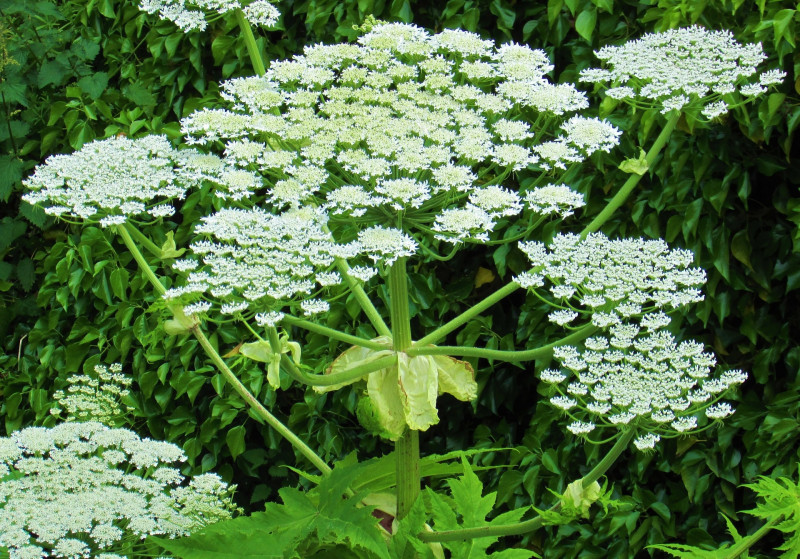
What should I do if my dog ate Giant hogweed?
How toxic is Giant hogweed?
| Toxicity: | (toxic) |
| Toxic parts: | All parts of the giant hogweed are toxic. |
| Toxic time: | - |
| Antidote: | Unknown |
If your dog shows symptoms of poisoning, it is always an emergency! Time is critical for your dog's life. You should immediately call your vet or the animal emergency services and make sure that a vet is on site and then go there immediately. For the treatment, it helps the vet a lot to know what your dog has ingested.
Occurrence Giant hogweed
| Plant species: | Garden and wild plant, perennial |
| Occurrence: | Fields and farmland, Riparian woodland, Gardens, Bushes, Parks |
| Areas: | Europe, Central Europe, Eastern Europe, North America |
| Flowering time: | summer, autumn |
| Fruit ripening: | summer, autumn |
Symptoms
Giant hogweed contains toxins (furanocoumarins) in all parts of the plant which, as contact toxins, can lead to prolonged and severe skin irritations when exposed to UV radiation. The furanocoumarins are absorbed through the skin and have a phytotoxic effect, which means that they can only develop their full effect through UV radiation. However, the vapours of the furanocoumarins, which come out especially on hot days, can also lead to symptoms and irritation.
The following symptoms are possible after contact with the plant or by inhaling the vapours of giant hogweed - even days after contact due to sun exposure:
- wounds and blisters (bloody or watery) especially on the nose, lips and around the eyes or ears
- itchy reddening of the skin
- symptoms similar to burns
- skin swelling, especially the head may swell
- blistering and inflammation after a short time
- blisters and irritation can last for weeks and lead to inflamed and oozing wounds
- shortness of breath, coughing, nausea
- fever
- circulatory shock, anaphylactic shock
- permanent pigmentation changes
Treatment
The sooner you act after contact with the plant, the better. It is best to immediately wash your dog thoroughly with soap and water and avoid sunlight.
Giant hogweed poisoning is always an acute emergency and you should see a vet immediately as your dog may react with shock.
The vet can treat your dog symptomatically depending on the severity of the symptoms. For example, treat with infusions, antihistamines, cortisone and with cooling compresses. Antibiotics may be useful to prevent secondary infections in open wounds.
Further poisonous plants from A to Z

DigiDogs in other languages and countries DeutschlandGreat BritainUnited StatesPolska
Copyright © 2023 DigiDogs, unless otherwise noted. All rights reserved.
Über uns -
Imprint -
Privacy Policy