Savin juniper is extremely toxic for dogs
Juniperus sabina 

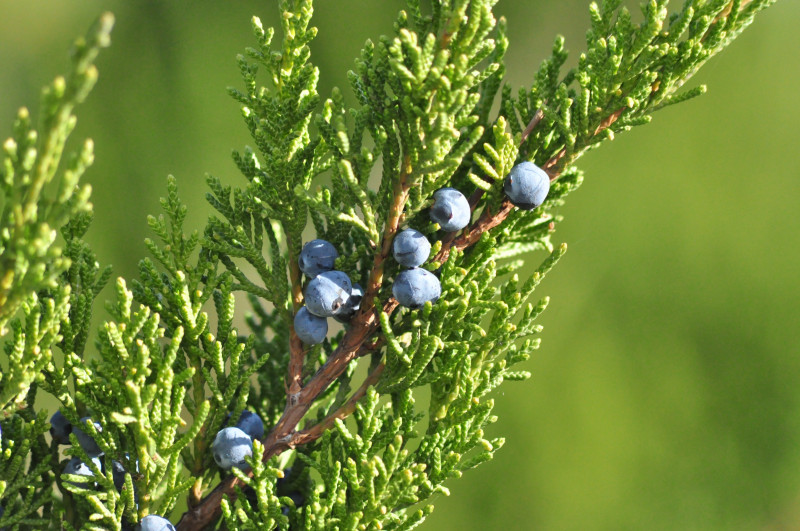
The savin juniper is an evergreen shrub or small tree that grows to a height of approx. 1-2 m. The brown bark is flaky and reddish-brown. The brown bark is leafy and brown-reddish. The needle-shaped and later scaly leaves have an unpleasant smell when rubbed. The pea-sized flowers are inconspicuous, uniform and can turn yellow, green, blue to black.
While the common juniper (Juniperus communis) is less poisonous, the savin juniper (Juniperus sabina) is a highly poisonous plant for dogs. Both look very similar.
All parts of the savin juniper are highly poisonous to dogs, especially the branch tips. In dogs, the lethal dose can start at about 14-22g of the savin juniper tips.
Savin juniper is also known as:
- savin
What should I do if my dog ate Savin juniper?
How toxic is Savin juniper?
| Toxicity: | (extremely toxic) |
| Toxic parts: | All parts of the savin juniper are highly poisonous to dogs, especially the branch tips. |
| Toxic time: | winter, spring, summer, autumn |
| Antidote: | Unknown |
If your dog shows symptoms of poisoning, it is always an emergency! Time is critical for your dog's life. You should immediately call your vet or the animal emergency services and make sure that a vet is on site and then go there immediately. For the treatment, it helps the vet a lot to know what your dog has ingested.
Occurrence Savin juniper
| Plant species: | tree |
| Occurrence: | Gardens |
| Areas: | Europe |
| Flowering time: | spring |
| Fruit ripening: | - |
Symptoms
The following symptoms may appear in case of poisoning by a savin juniper:
- reddening of the mucous membrane of the mouth
- increased salivation
- vomiting
- colic and abdominal pain
- diarrhoea, which may also be bloody
Ingesting very large amounts may cause the following additional symptoms:
- apathy
- lack of appetite
- colic
- bloody diarrhoea
- increased thirst and urine output
- blood may be present in the urine
- the mucous membranes may turn yellowish
- palpitations
- decreased urine output up to complete failure of urine output
- severe skin irritation
- death may occur in very severe cases due to respiratory paralysis
Treatment
The vet will always try to remove the ingested poison from the body and alleviate the specific symptoms of poisoning.
There are different methods to remove the poison from the body:
1. ACTIVATED CHARCOAL: Activated charcoal can absorb toxins. If possible, it should be administered within 2 hours after ingestion of the poison, so that the toxin does not enter the bloodstream.
2. LAXATIVES: The vet may combine the administration of activated charcoal with a laxative.
3. VOMITING: The vet can also induce vomiting using medication to remove the toxin from the body.
To relieve the symptoms of poisoning, the vet can also administer infusions and pain-relieving medication.
More information on dog poisonings can be found here:
Further poisonous plants from A to Z




DigiDogs in other languages and countries DeutschlandGreat BritainUnited StatesPolska
Copyright © 2023 DigiDogs, unless otherwise noted. All rights reserved.
Über uns -
Imprint -
Privacy Policy