Fly honeysuckle is toxic for dogs
Lonicera xylosteum 

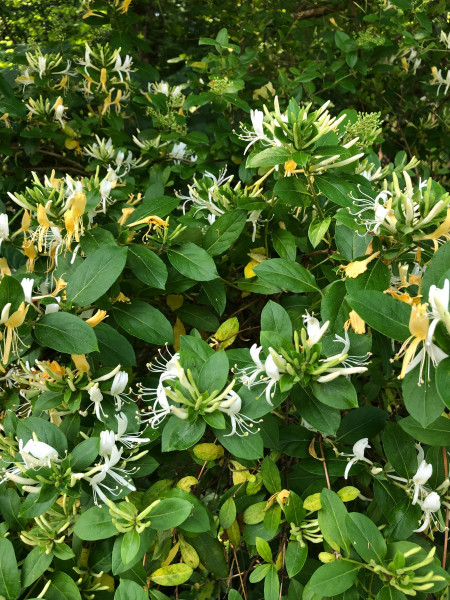
The fly honeysuckle is a deciduous shrub from the Caprifoliaceae family. It is very slow-growing and usually reaches up to 2 m in height.
The leaves are ovate and grow up to 5 cm. They have grey hairs on both sides. The fly honeysuckle is very undemanding and adapts to many conditions. However, it is a semi-shade or shade plant and therefore tends to be found in woods.
It bears white-yellow flowers and red berries. The berries grow in pairs. The fly honeysuckle is very popular with both butterflies and birds.
The leaves of the fly honeysuckle in particular, but also the berries, are poisonous to dogs.
Fly honeysuckle is also known as:
- European fly honeysuckle
- dwarf honeysuckle
- fly woodbine
What should I do if my dog ate Fly honeysuckle?
How toxic is Fly honeysuckle?
| Toxicity: | (toxic) |
| Toxic parts: | The leaves of the fly honeysuckle in particular, but also the berries, are poisonous to dogs. |
| Toxic time: | summer |
| Antidote: | Unknown |
If your dog shows symptoms of poisoning, it is always an emergency! Time is critical for your dog's life. You should immediately call your vet or the animal emergency services and make sure that a vet is on site and then go there immediately. For the treatment, it helps the vet a lot to know what your dog has ingested.
Occurrence Fly honeysuckle
| Plant species: | Shrub |
| Occurrence: | Gardens, Parks, Forests |
| Areas: | Europe |
| Flowering time: | spring, summer |
| Fruit ripening: | summer, autumn |
Symptoms
The following symptoms of poisoning can occur with fly honeysuckle:
- nausea
- vomiting
- abdominal pain
- diarrhoea
In case of severe poisoning, the following symptoms may also occur:
- palpitations
- collapse
- muscle cramps
- paralysis
- apathy
- shortness of breath
- respiratory paralysis can lead to death
Treatment
The vet will always try to remove the ingested poison from the body and alleviate the specific symptoms of poisoning.
There are different methods to remove the poison from the body:
1. ACTIVATED CHARCOAL: Activated charcoal can absorb toxins. If possible, it should be administered within 2 hours after ingestion of the poison, so that the toxin does not enter the bloodstream.
2. LAXATIVES: The vet may combine the administration of activated charcoal with a laxative.
3. VOMITING: The vet can also induce vomiting using medication to remove the toxin from the body.
More information on dog poisonings can be found here:
Further poisonous plants from A to Z







DigiDogs in other languages and countries DeutschlandGreat BritainUnited StatesPolska
Copyright © 2023 DigiDogs, unless otherwise noted. All rights reserved.
Über uns -
Imprint -
Privacy Policy