Calla lily is toxic for dogs
Zantedeschia aethiopica, Calla aethiopica 

Calla lily belongs to the plant genus of the zantedeschia in the family of the Araceae family. The plants with the impressively beautiful flowers are native to South Africa and are popular as an exotic houseplant.
The name "calla" comes from the Greek and means beauty, which is absolutely true of the strikingly beautiful flowers.
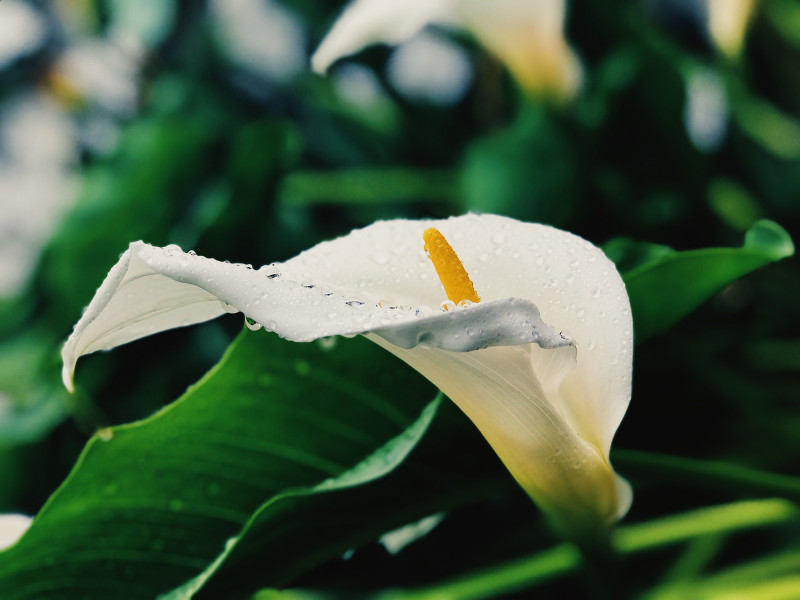
The calla lily is a herbaceous perennial that can reach a height of about 80 cm (or more when old). Its leathery, green and arrow-shaped leaves are long-stalked. It has conspicuous, large yellow flower heads surrounded by a large, funnel-shaped petal. The flowers can be brilliant white, cream, yellow, orange, pink, purple or red. The flowering time for houseplants is in spring. The flowers last three to eight weeks and are also offered as cut flowers. Later, green, then orange or red berry-like fruits form from the flowers.
All plant parts of the calla lily contain a milky liquid that is poisonous to dogs. It contains oxalates, oxalic acids, glycosides and saponins that are toxic to dogs.
Calla lily is also known as:
- arum lily
What should I do if my dog ate Calla lily?
How toxic is Calla lily?
| Toxicity: | (toxic) |
| Toxic parts: | All parts of the calla lily are toxic to dogs. |
| Toxic time: | winter, spring, summer, autumn |
| Antidote: | Unknown |
If your dog shows symptoms of poisoning, it is always an emergency! Time is critical for your dog's life. You should immediately call your vet or the animal emergency services and make sure that a vet is on site and then go there immediately. For the treatment, it helps the vet a lot to know what your dog has ingested.
Occurrence Calla lily
| Plant species: | flower, Indoor plant |
| Occurrence: | - |
| Areas: | Europe |
| Flowering time: | winter, spring |
| Fruit ripening: | winter, spring |
Symptoms
The following symptoms may occur in case of poisoning:
- increased salivation
- irritation of the mucous membrane of the mouth and swelling
- shortness of breath
- nausea
- vomiting
- diarrhoea
- stomach pain
In the case of very severe poisoning, the following additional symptoms may occur:
- palpitations
- heart and circulatory problems
- kidney problems (increased urination, decreased to no urination),
- faintness
- death may occur due to respiratory arrest
Treatment
While in acute poisoning it is often advisable to try to remove the poison from the body, this is not advisable in the case of calla lily, as the poison irritates the mucous membranes and can lead to shortness of breath.
The vet will cool and treat irritated areas, give calcium-containing drinks or food. In addition, painkillers can be given and the dog's heart and kidney function can be monitored.
Further poisonous plants from A to Z







DigiDogs in other languages and countries DeutschlandGreat BritainUnited StatesPolska
Copyright © 2023 DigiDogs, unless otherwise noted. All rights reserved.
Über uns -
Imprint -
Privacy Policy